History of Yin and Yang
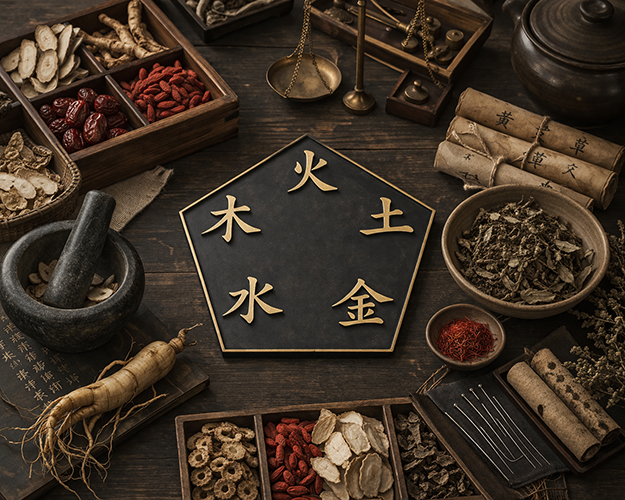
Yin and Yang: The Masterpiece of the Chinese Spirit
The black and white symbol of Yin and Yang is a global icon. It adorns flags, books, and amulets. But for those who rise above superficial knowledge, the story of Yin and Yang is nothing less than the origin story of Chinese thought itself. It is the story of how the ancient Chinese cracked the code of the universe. This is no myth; it is a journey spanning thousands of years of wisdom, recorded in one of the world's oldest books: the I Ching.
The Beginning: The Broken and Unbroken Lines (700 BCE)
Long before there were letters to capture complex ideas, the sages of the Zhou Dynasty used lines. Around 700 BCE, the first written record of this system appeared in the I Ching (Book of Changes). The symbols were simple but contained the seed of the universe: a broken line (-- --) representing the receptive, dark, and feminine: Yin. And an unbroken line (-----) representing the creative, light, and masculine: Yang.
The ancient Chinese observed that all changes in the world, from day and night to the seasons, could be understood as the interaction between these two fundamental forces. It was a revelation: reality is not a static entity, but an eternal dance of opposites.
The Evolution: From Two Lines to a Diagram (Later Zhou Period)
Soon, thinkers realized that reality was more complex than just "on" or "off." Transitional phases had to exist. Therefore, they added a third line. By stacking three lines (top, middle, bottom), eight trigrams (Ba Gua) were formed. These eight symbols represented fundamental phenomena such as heaven, earth, water, fire, thunder, wind, mountain, and more.
By then doubling the trigrams into six lines (hexagrams), the sages could describe all 64 possible situations in human existence. This was the birth of the Yin-Yang diagram. It was no longer black and white, but a spectrum of gray. One could now indicate not only full Yin (Kun, the earth) and full Yang (Qian, heaven), but also the 62 intermediate stages of becoming, flourishing, and decaying.
The Perfection: The Round Symbol (Song Dynasty, ca. 1000 CE)
The theory of the I Ching was refined for over a thousand years by giants like Confucius and Lao Tzu. But the iconic round symbol we know today (Taijitu) only appeared around the year 1000 CE, during the Song Dynasty. The Neo-Confucian philosopher Zhou Dunyi is often credited with popularizing this diagram.
He added two revolutionary insights:
- The Circle: The circle envelops everything. It shows that Yin and Yang are not separate parts, but part of one undivided whole, the ultimate reality (Taiji).
- The Dots: In the middle of the black (Yin) area lies a white dot, and in the white (Yang) area lies a black dot. This is the crown of Chinese wisdom: there is never an absolute separation. Even in the deepest dark lies the seed of light (Yang), and at the peak of light, the shadow (Yin) has already begun to grow.
The Universal Key
This theory, born from the I Ching and perfected by generations of Chinese scholars, became more than just philosophy. It became the backbone of Traditional Chinese Medicine (TCM). Health is balance (Yin = Yang). Disease is disharmony. Healing is restoring the flow.
The world around us, the stars, the seasons, our bodies, and our minds – they all fall within this one, simple, ingenious concept. The history of Yin and Yang is therefore the history of how China taught the world to see harmony in motion.